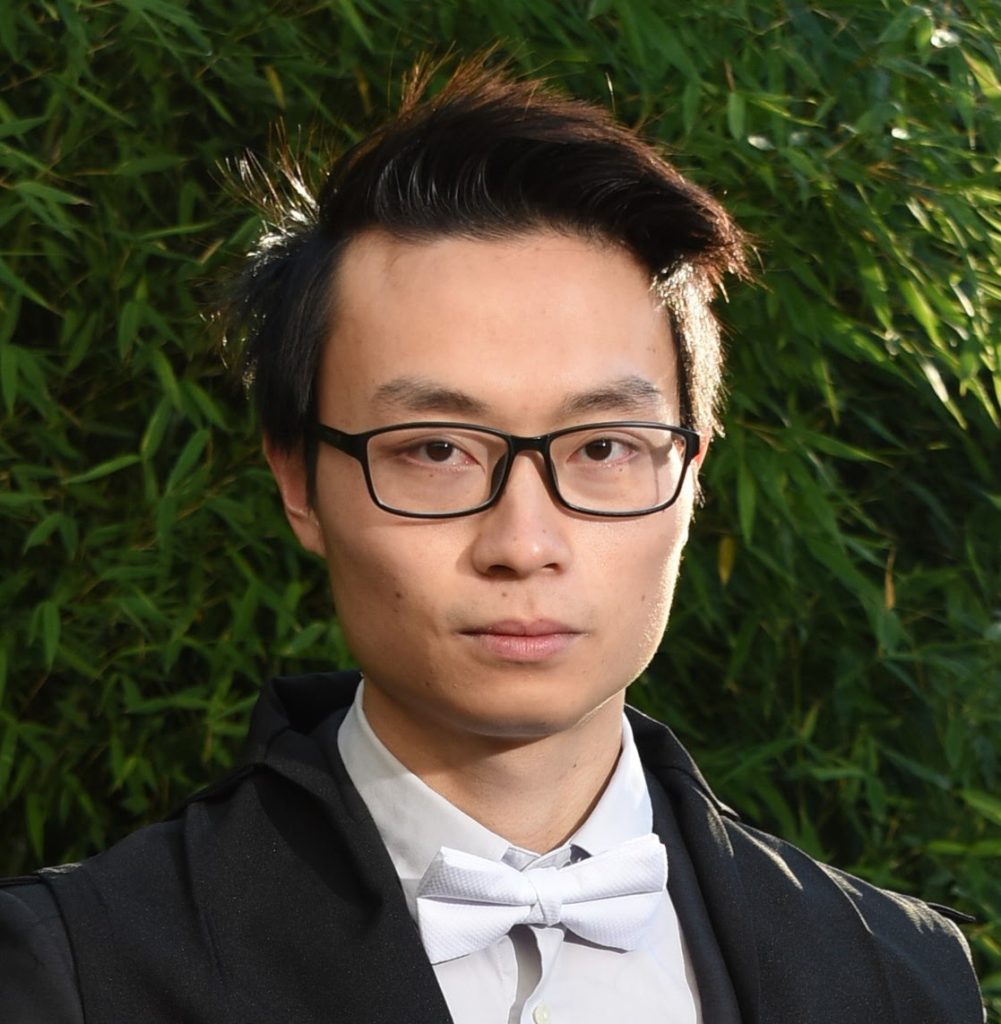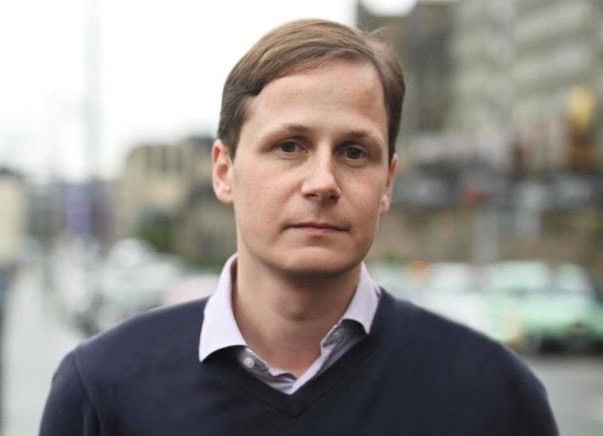
Dr Andrey Kravchenko
Subject: Computer Science and Maths
Department: Computer Science
Academic position: Stipendiary Lecturer in Computer Science
Contact
Qualifications
Lecturer in Computer Science (Magdalen College, University of Oxford, 2022-2023, 2026 – Present; Christ Church, University of Oxford, 2020 – 2024; Hertford College, University of Oxford, 2020 – Present). Doctor of Philosophy (Magdalen College, University of Oxford, 2010 – 2015). MCompSci (Magdalen College, University of Oxford, 2006-2010).
Undergraduate Teaching
I teach the following undergraduate Computer Science courses at the University of Oxford: Functional Programming, Imperative Programming, Discrete Maths, Continuous Maths, Linear Algebra, Probability, Introduction to Formal Proof, Design and Analysis of Algorithms, Algorithms and Data Structures, Models of Computation, Digital Systems, Databases, Compilers, Artificial Intelligence, Machine Learning, and Computational Game Theory.
I also supervise undergraduate students for Part B and Part C projects that are aligned with my research interests.
Research Interests
My DPhil qualification has induced me to explore the intersection of machine learning and unstructured data extraction. I had a significant role in the DIADEM project, which produced state-of-the art research in the field of large-scale fully automated web data extraction. The technology underlying DIADEM was later commercialised as an Oxford University spin-off Wrapidity, which was acquired by Meltwater, one of the most predominant world-wide media intelligence companies. My current research focus is on exploring the broader connection between black-box machine learning models and knowledge-based systems, with a particular focus on knowledge graphs. Machine learning models do not involve human expertise and are often difficult, if not impossible, to explain. On the contrary, knowledge-based systems are easy to translate into an interpretable form but are based on human domain expertise and therefore require significant manual work to build. In particular, my research has been focused on multiagentic systems empowered by knowledge graphs and reasoning capabilities to both improve the accuracy and counteract possible hallucinations. I would like to work towards bridging the gap between these two different aspects of artificial intelligence in my research, and have a strong interest in scientific collaborations. If you have a project which may relate to my area of expertise, please contact me to discuss ideas of mutual interest and potential collaboration.
My research has always had a strong focus on real-world applications, as well as potential business opportunities. I was actively involved with two Oxford University spin-offs focused on automated web data extraction and large-scale knowledge graphs combined with reasoning, both based on research done here at Oxford. I have also founded an AI consultancy firm, Vitruvian Quality Lab, which develops a wide range of AI-based products with a particular focus on products that employ multiagentic systems grounded into knowledge graphs and reasoning.